

The Development Academy of the Philippines (DAP) convened members of its top management and general employees from the Pasig and Mindanao offices for a four-day orientation on the Integrated Management System (IMS), held in hybrid format on January 26-29, 2026 at the DAP Pasig Building.
The activity was designed to establish a shared understanding of the IMS framework and its role in strengthening institutional governance, advancing strategic priorities, and reinforcing DAP’s public service mandate. By bringing together leadership and staff, the orientation fostered alignment on how an integrated system drives operational excellence and organizational coherence.
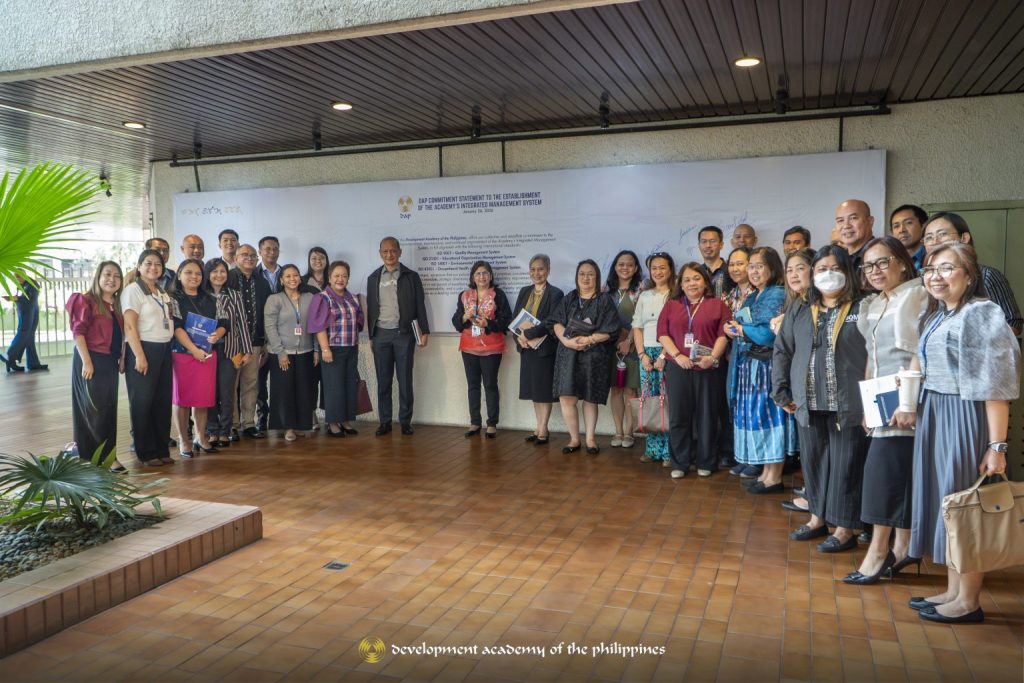
Participants were introduced to DAP’s IMS– a unified framework that integrates the ISO 9001:2015 (Quality Management System), ISO 21001:2025 (Educational Organization Management System), ISO 14001:2015 (Environmental Management System), and ISO 45001:2018 (Occupational Health and Safety Management System). The sessions covered the structure and standards of the system, clarified the roles and responsibilities in sustaining the implementation, and highlighted applications in day-to-day work operations.
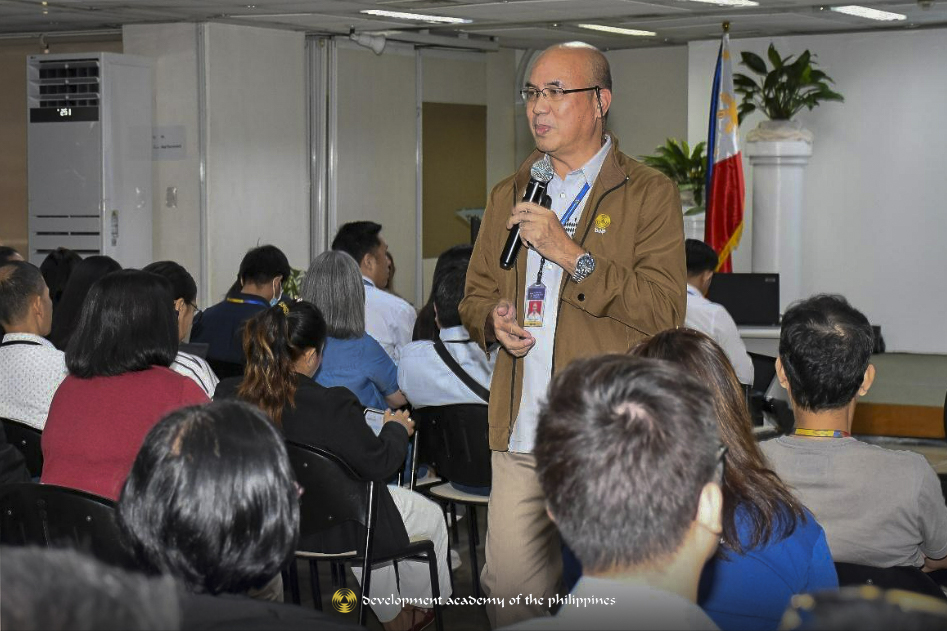
The orientation likewise reinforced core quality management principles and emphasized leadership accountability, sound governance, and strategic oversight as critical enablers in establishing and institutionalizing the IMS.

A key highlight of the program was the Commitment Setting during which the members of the Management Committee and general employees formally expressed their collective support for the IMS. This symbolic gesture affirmed their shared responsibility in ensuring its effective implementation, maintenance, and continual improvement.


The four-day orientation marked a significant milestone in DAP’s IMS journey–bringing leadership and employees together under one integrated framework and a clear path forward. It reaffirmed the Academy’s commitment to quality service delivery, learner-centered education, environmental stewardship, and a safe and healthy workplace. With this foundation in place, the DAP now moves confidently to the next phase: the conduct of a gap assessment.