
The Development Academy of the Philippines (DAP) and the Asian Productivity Organization (APO) successfully conducted the International Conference on Digital Transformation and Regulatory Technology (RegTech) for Improving Public Sector Productivity on 1 – 2 October 2025 at the Holiday Inn & Suites Galleria, Manila, Philippines.
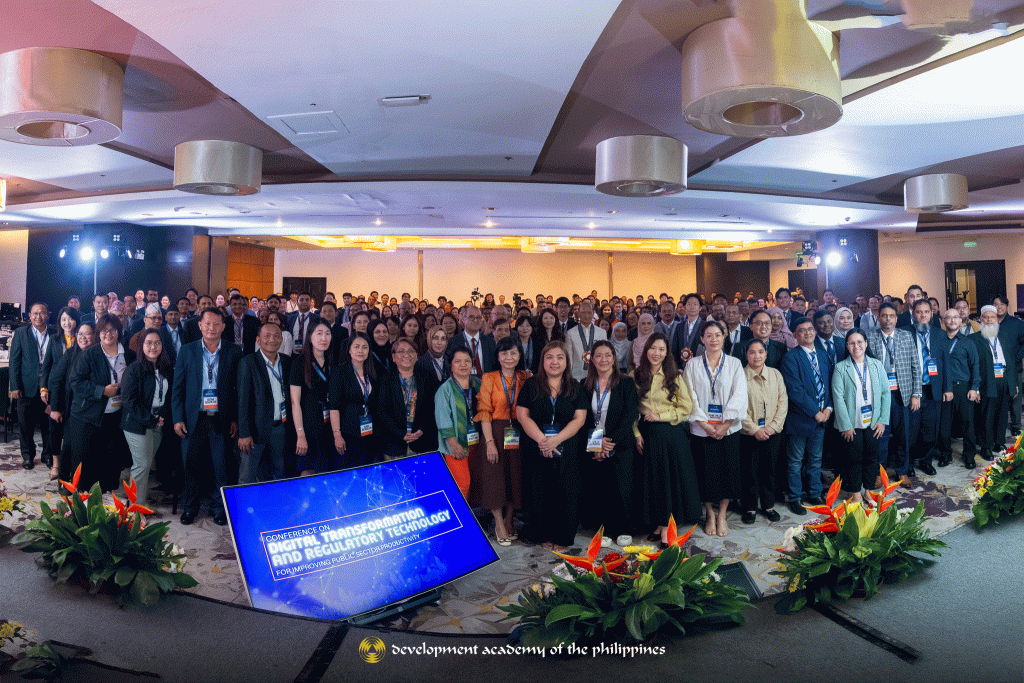
The two-day hybrid conference gathered more than 200 participants from 16 APO member economies including senior government officials, industry experts, as well as academe and private sector leaders, to explore how RegTech and digital transformation can strengthen governance, improve regulatory systems, and advance productivity in the public sector.
With the theme “From Digital Transformation to RegTech: Building the Foundations for Smarter Regulation,” the event examined how digital tools and innovations can drive transparency, efficiency, and citizen trust in government institutions.
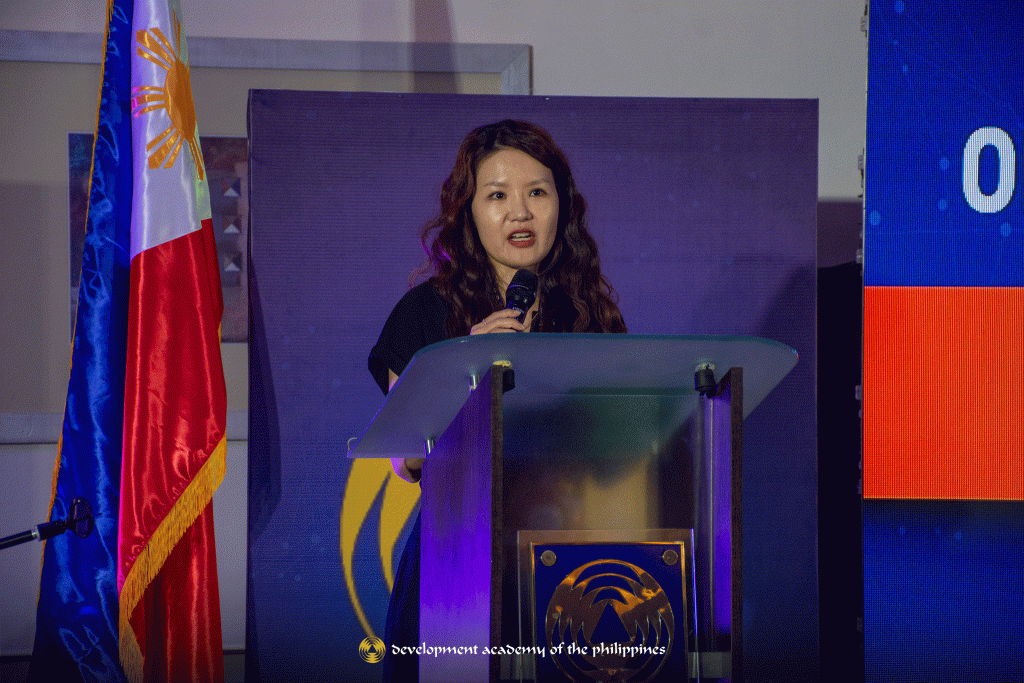
Ms. Kyung Hyun Park, Program Officer from the APO Secretariat, highlights in her welcome message that while emerging technologies such as artificial intelligence and digital ID systems possess immense potential to transform public administration, technology alone is insufficient, the true transformation must occur within governance itself.
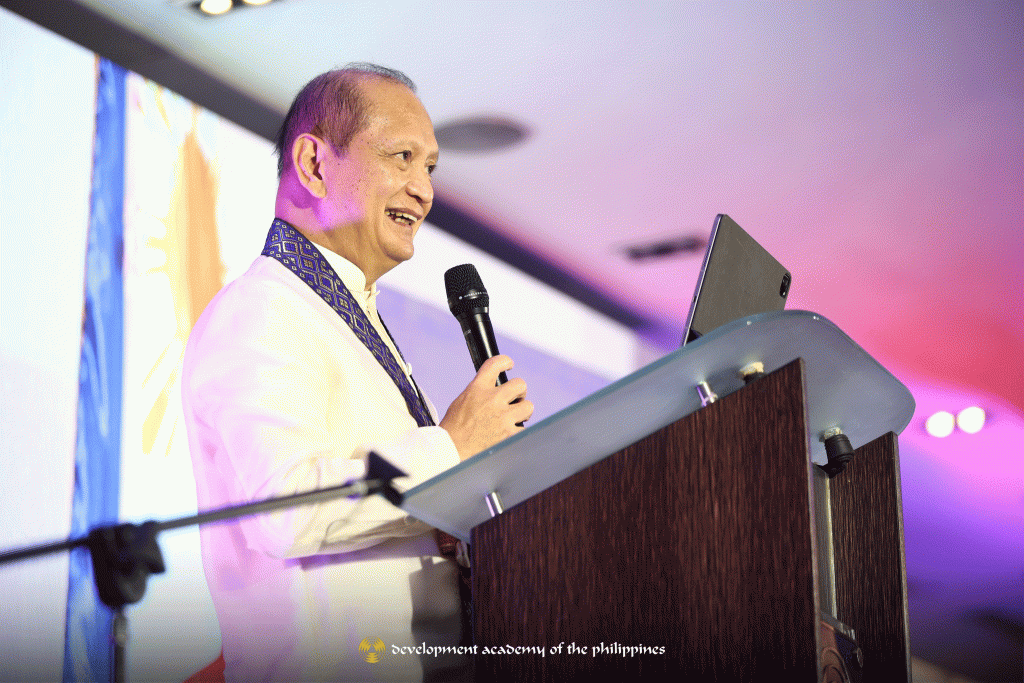
In his welcome remarks, DAP Acting President and CEO Leocadio S. Sebastian, PhD, CESO I, underscores that the conference should go beyond discussions of technology, highlighting instead the importance of vision and courage. He emphasized that the event aimed to promote governance as a catalyst for productivity rather than a barrier to it.
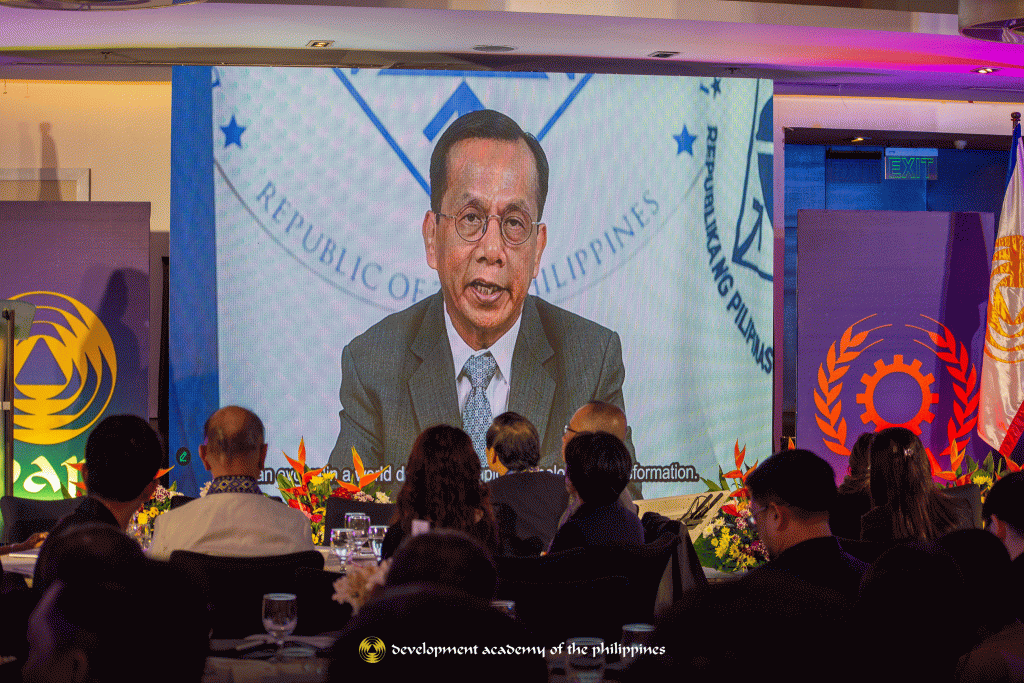
Delivering the keynote address, Department of Economy, Planning, and Development (DEPDev) Secretary Arsenio M. Balisacan, PhD, who also serves as the APO Director for the Philippines, highlights the transformative potential of digital governance in achieving inclusive, innovation-led productivity growth across the Asia-Pacific region.
The plenary also recognized representatives from APO member countries including Bangladesh, Cambodia, Fiji, India, Indonesia, Lao People’s Democratic Republic, Malaysia, Mongolia, Nepal, Pakistan, Republic of China, Sri Lanka, Thailand, Turkiye, Vietnam, and Philippines—reflecting the international scope of the event and the spirit of collaboration among participating economies.
Day 1 Highlights: RegTech, Sandboxes, and Readiness for the Digital Era
Day 1 featured a series of presentations from distinguished experts and practitioners who shared international perspectives and practical insights on applying RegTech to the public sector:
- Dr. Keita Oikawa, Research Fellow of the Economic Research Institute for ASEAN and East Asia (ERIA) discussed how digital transformation strategies yield meaningful productivity gains when supported by institutional capability, effective management, skilled labor, and coherent policy frameworks.
- Dr. Hau Chen Mike Lee, Consultant of Group Synergy and Retail Planning of the Far Eastern Group (Taiwan) presented real-world RegTech applications in finance and smart city development, emphasizing how integrated data systems can serve as practical toolkits for regulators to enhance agility and evidence-based decision-making.
- Dr. Minh Khuong Vu, Associate Professor of the Lee Kuan Yew School of Public Policy, National University of Singapore discussed how ASEAN governments can strengthen institutional readiness for emerging technologies through a five-pillar framework centered on leadership, coordination, capacity, legal foundations, and trust to build adaptive and future-ready governance systems.
- Mr. Melchor T. Plabasan, Director of the Technology Risk and Innovation Supervision Department at the Bangko Sentral ng Pilipinas (BSP), explained how the Philippines is using a structured regulatory sandbox framework to safely test fintech and digital finance innovations, promote regulatory learning, and strengthen collaboration between regulators and industry.
- Dr. Hae Ok Choi, Research Fellow of the Science and Technology Policy Institute, Korea highlighted global best practices in regulatory sandbox governance by highlighting models from the UK, Japan, and Korea that demonstrate how adaptive frameworks can enhance public-sector innovation and inform future policy design.
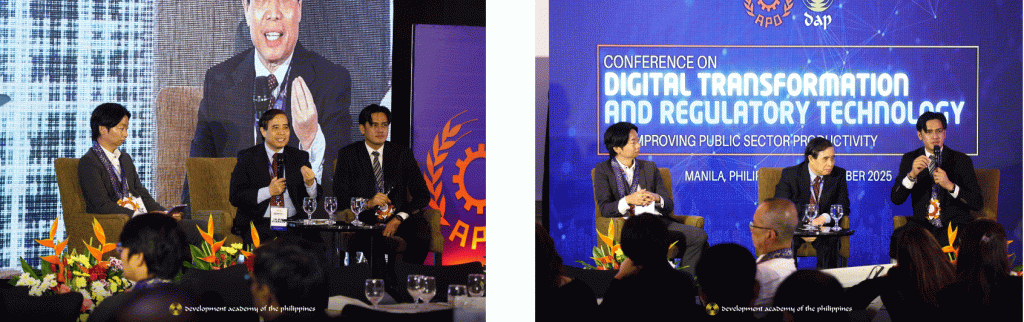
The day concluded with a panel discussion featuring Dr. Oikawa, Dr. Vu, and Mr. Gilbert T. Trinchera, Partner of the KPMG R.G. Manabat & Co.. The panel delved into the leadership and institutional readiness required for digital transformation, underscoring how governance frameworks must evolve alongside technology adoption.
Day 2 Highlights: Case Studies, Scaling Strategies, and Regional Reflections
Day 2 opened with a presentation by Mr. Gilbert T. Trinchera on how open data and digital public infrastructure such as digital ID systems, secure payment platforms, and interoperable data exchanges serve as vital public assets to enable transparent, inclusive, and efficient governance and support the growth of RegTech solutions in the public sector.
Participants later joined three parallel case study sessions focusing on:
- AI and Regulatory Sandboxes for Smarter Compliance (with Dr. Hae Ok Choi and Mr. Melchor Plabasan);
- Policy and Governance for Digital Transformation and RegTech Readiness (with Dr. Minh Khuong Vu and Dr. Keita Oikawa); and
- Open Data and Digital Public Infrastructure for Regulatory Efficiency (with Dr. Hau Chen Mike Lee and Mr. Gilbert T. Trinchera).
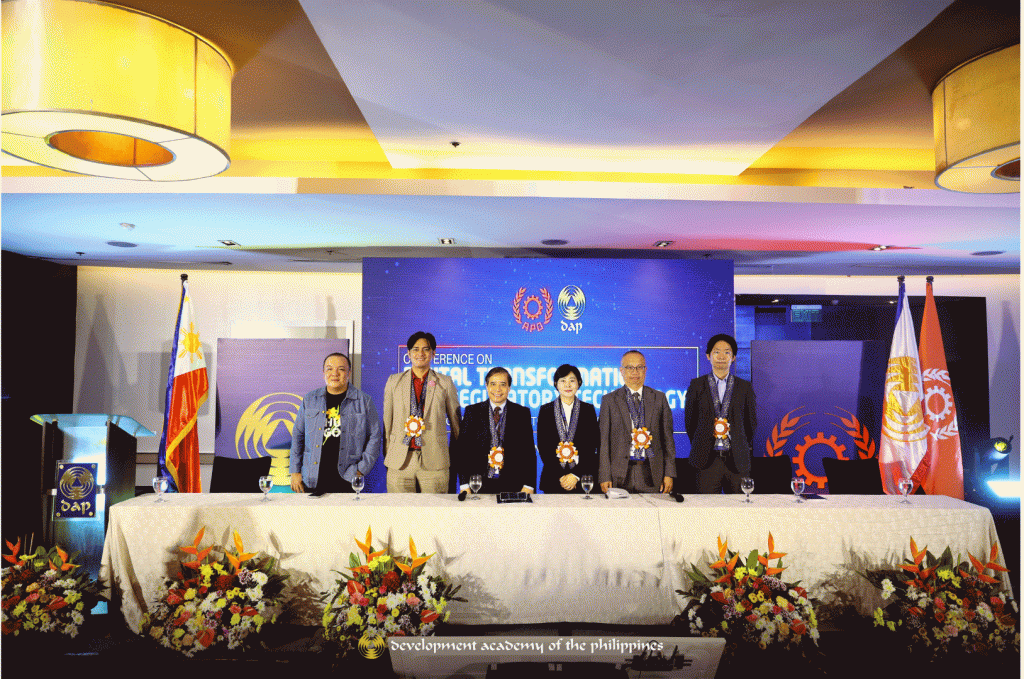
In the afternoon, an integration session gathered the speakers and participants, where the experts reflected on lessons learned and outlined steps toward future-ready digital public infrastructure across APO member economies.
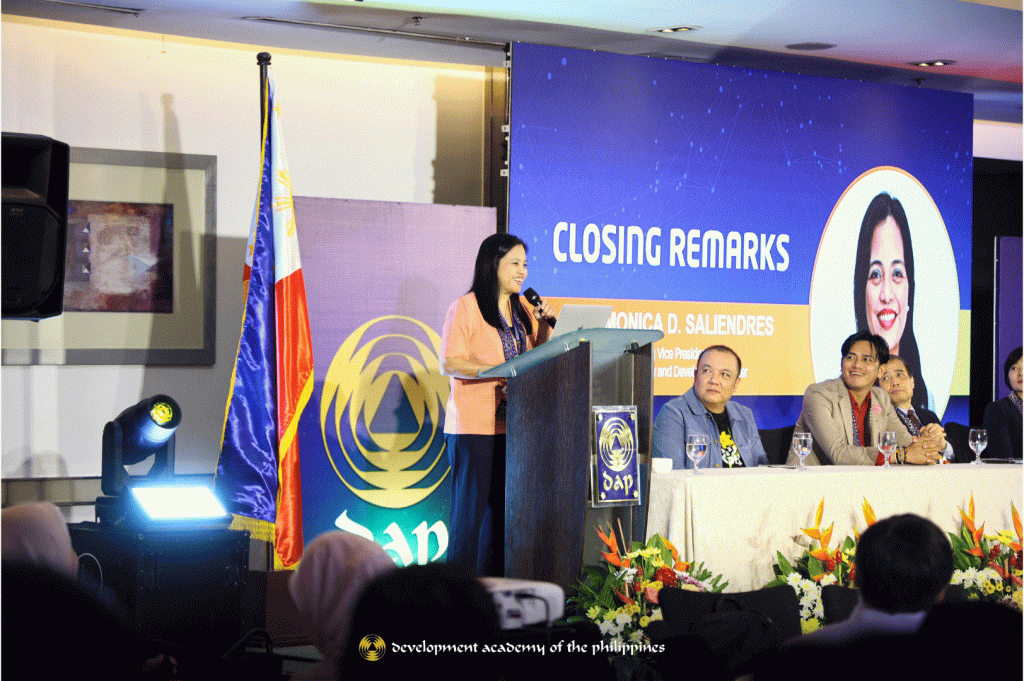
In her closing remarks, Ms. Monica D. Saliendres, DAP Acting Vice President for the Productivity and Development Center, commends the participants for their active engagement and collaborative spirit, emphasizing that digital transformation is a collective journey that relies on collaboration, capacity building, and responsible innovation to create adaptive and inclusive regulatory systems.
The conference also featured an exhibit of digital innovations from government and private entities, including the DAP, Philippine Statistics Authority, Department of Information and Communications Technology, Tourism Promotions Board (TPB), Local Government Unit of Naga, and Globe Telecommunications.
Among the highlights of the exhibit were the following:
- The Philippine Identification System (PhilSys), a landmark government initiative designed to establish a single, unified citizen identification system, serves as a key enabler of digital innovation and efficiency across both public and private sectors.
- Guided by the vision of fostering a connected nation, the eGov PH mobile application unifies various government agencies into a single, integrated online system, aimed at reducing economic costs and enhancing service accessibility for the public.
- The TPB app serves as a modern tool to promote Philippine destinations, support local tourism stakeholders, and enhance visitor experience through technology-driven services.
- The MyNaga app consolidates multiple government services into one digital platform, ranging from business permits, real property tax payments, and health services to public announcements and emergency alerts to modernize public service delivery and strengthen engagement between citizens and the local government.
The event concluded with expressions of gratitude from international and local representatives, including participants from India, Cambodia, and the Philippines, followed by a symbolic group photo to mark the successful culmination of the event.
As the digital era continues to redefine governance, the DAP and APO reaffirm their shared commitment to advancing innovation, regulatory reform, and productivity-enhancing initiatives across the Asia-Pacific region.